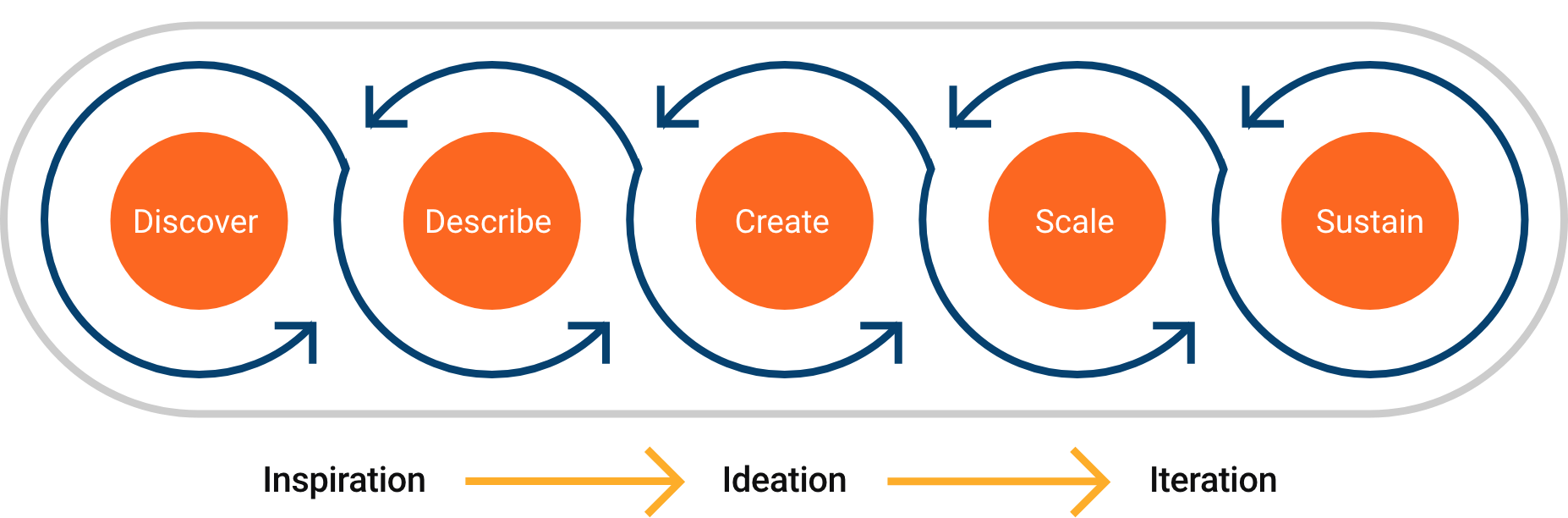
Human-centered, Agile-driven
At the intersection of HCD and Agile is Lean UX, a streamlined approach to product design. User feedback is no longer a late-stage checkbox but a continuous input, shaping decisions at every iteration. This integration keeps teams aligned with real user needs without derailing timelines.
Competition for the Department of Veteran Affairs Veteran-Facing Services Applications (VSA) contract included a "hackathon" component that centered on building a working prototype—from concept to completion—in one simulated sprint. I led a challenge team that embraced a Lean UX approach and pursued a human-centered, accessibility-foremost, mobile-first strategy.
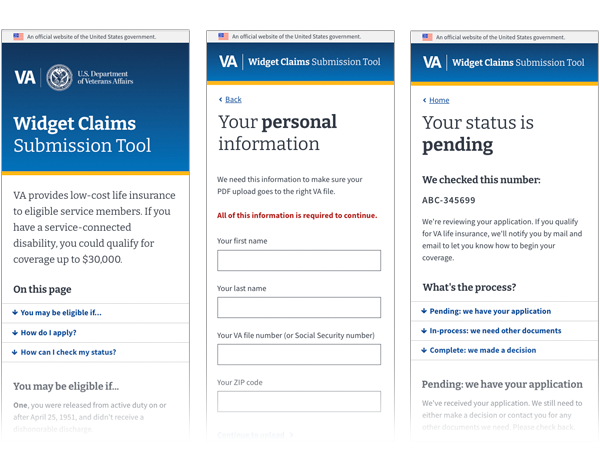
To see some of the work produced during the challenge, use the links below. These will open in a new browser tab.
Talk to users early and often
Engaging in user research prevents costly missteps. By identifying pain points and opportunities up front, teams can refine concepts before committing significant resources to time-intensive development. The result? Smarter solutions, delivered faster with less waste.
Design is the third dimension
When designers are fully integrated into Scrum teams, the requirements of platform, process and people are better balanced. Close collaboration between developers, product owners and designers ensures users' needs and goals remain in focus throughout the software development lifecycle. This delivers a better product–and a better user experience.